If you suddenly have no hot water, start with safety: confirm it’s a whole-home issue, turn off power or gas if you notice hazards, verify inlet and shutoff valves are open, and note any error codes. In most homes, the culprits are a tripped breaker, pilot/ignition failure, thermostat setting or control fault, burned-out element or burner, sediment buildup, a valve or pressure problem, or a leak. For help, ask Plumber Lawrenceville GA what information to provide and which next steps are appropriate.
Key Takeaways
- Begin with safety checks and confirm whether the outage is at one fixture or whole-home.
- Common causes include power/fuel issues, ignition failures, thermostat faults, failed elements/burners, sediment, and leaks.
- Keep water near 120°F for safety and efficiency; flush annually and inspect the anode rod.
- Stop DIY if breakers re-trip, pilots won’t hold, you smell gas, or you see scorching/water near power.
A cold shower is a fast wake-up call. The tap runs, but the heat never comes. Before frustration takes over, take a breath. A few safe checks can point you in the right direction. With the right steps, you can protect your home, save time, and know when to bring in a pro from Plumber Lawrenceville GA.
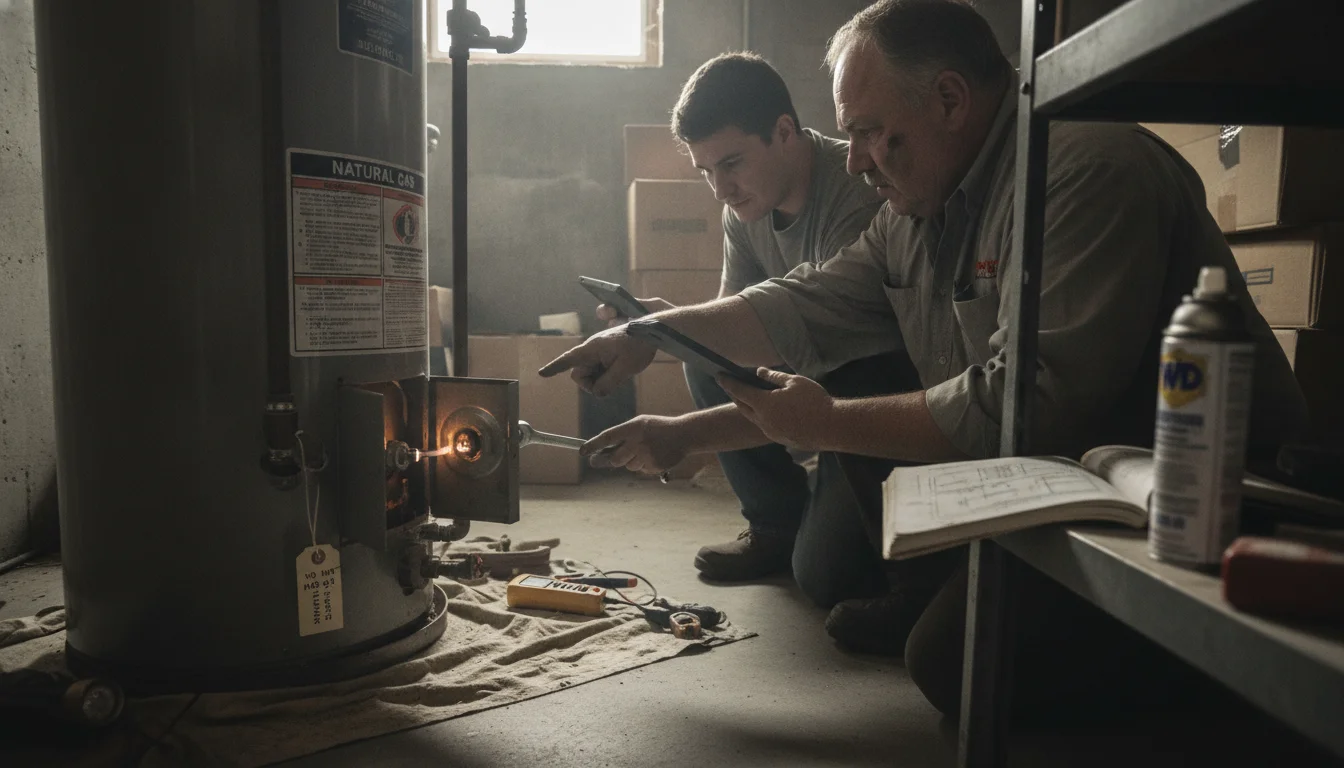
If you need help, ask Plumber Lawrenceville GA which diagnostic details and service options apply to your heater. This guide explains how heaters work, why heat can stop, and the top seven issues to check. It also shows when repair makes sense, when to replace, and how to prevent the next surprise. Homeowners and businesses in Lawrenceville and nearby areas can use this as a clear plan.
Table of Contents
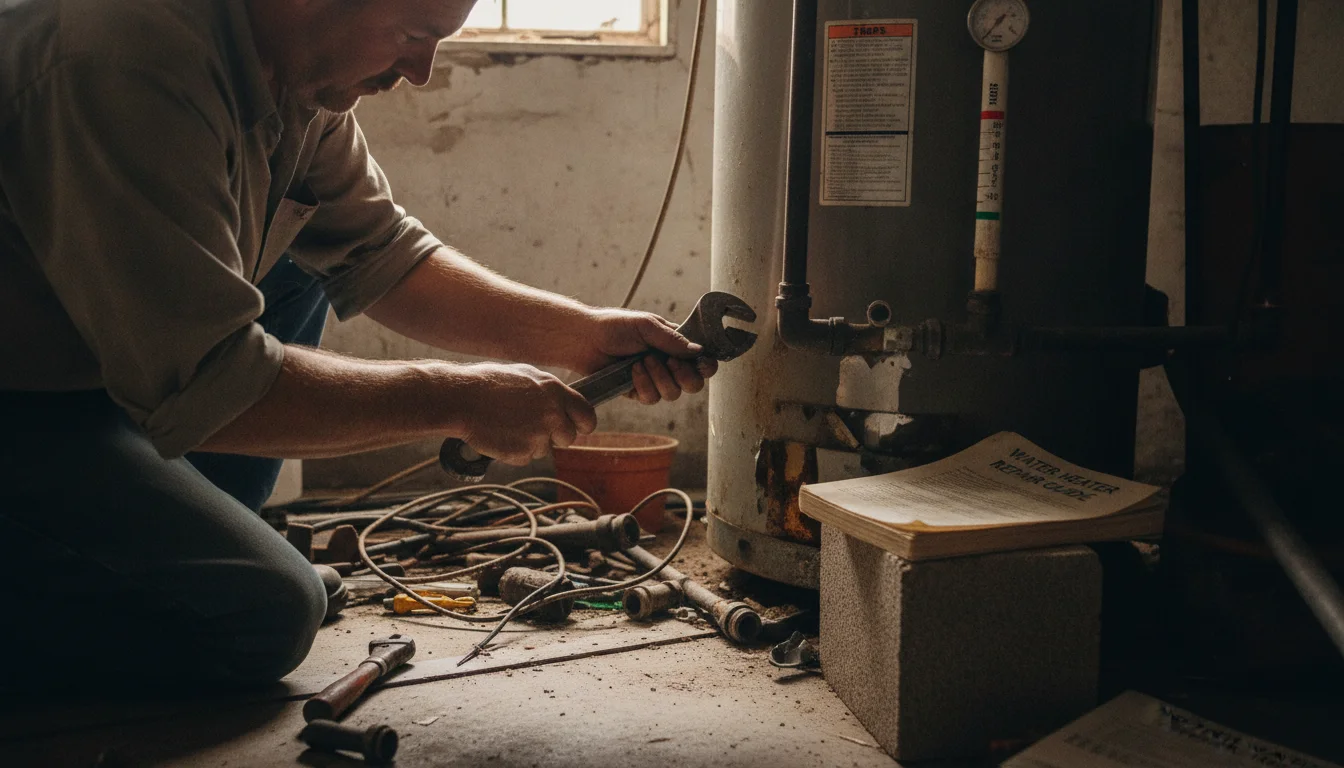
- Start Here: No Hot Water? Quick Safety Checks and Next Steps
- How a Water Heater Works: Tank, Tankless, Gas, and Electric Basics
- Fast Diagnosis: Top Reasons You Suddenly Have No Hot Water
- Likely Problem #1: Tripped Breaker or Blown Fuse (Electric)
- Likely Problem #2: Pilot Light Out or Ignition Failure (Gas)
- Likely Problem #3: Faulty Thermostat or Wrong Temperature Setting
- Likely Problem #4: Burned-Out Heating Elements or Burner Failure
- Likely Problem #5: Sediment Buildup and Scale Reducing Heat Transfer
- Likely Problem #6: Valve or Pressure Issues Limiting Hot Water
- Likely Problem #7: Leaks, Corrosion, or Tank Failure
- Cold or Inconsistent Hot Water: Special Cases to Consider
- When to Call a Plumber: Urgent Signs and 24/7 Emergencies
- Repair vs. Replacement: Age, Efficiency, and Safety Criteria
- What It Costs: Typical Repair Pricing and Project Timelines
- Safe DIY vs. Pro-Only Repairs: Know Your Limits
- Preventive Maintenance That Keeps Hot Water Flowing
- Choosing a New Water Heater: Size, Recovery Rate, and Efficiency
- Frequently Asked Questions
What It Costs: Typical Repair Pricing and Project Timelines
Diagnostic visits and common part costs
The final cost depends on the heater’s brand, fuel type, failed component, access, corrosion, and whether additional safety or code work is needed. A professional can confirm the fault and provide a quote before work begins.
Labor ranges for electric vs. gas work
Gas repairs may involve venting and safety checks, while electric repairs may involve testing circuits and elements. Replacement work is generally more involved than a single-component repair. The final cost is confirmed on a quote.
Same-day fixes vs. parts ordering delays
Timing depends on the fault, access, and whether the correct replacement part is available. A professional can explain the expected schedule and include the applicable work in a quote.
Factors that drive price up or down
Age, rust, hard water, tight spaces, permits, code updates, and new venting can affect the scope of work. Upfront testing helps identify those factors, and the final cost is confirmed on a quote.