The water leak repair cost for a commercial property depends on the leak’s location, size, access, damage, and urgency. An exposed fitting may need a simple fix, while a hidden pipe can require testing, surface access, drying, and added work. A written quote confirms the final scope and cost.
Commercial leaks can stop work, harm stock, and create safety risks. Fast action can help limit water damage and protect the building. Plumber Lawrenceville GA helps property owners review leak concerns and plan suitable repairs.
Table of Contents
- How much does commercial water leak repair cost?
- What types of commercial water leaks need professional repair?
- How does leak location affect commercial repair costs?
- What does a commercial water leak inspection include?
- When is emergency commercial leak repair necessary?
- Should a commercial water leak be repaired or replaced?
- How can businesses compare commercial leak repair quotes?
- Frequently Asked Questions
- Key Takeaways
- Conclusion
How much does commercial water leak repair cost?
Commercial water leak repair cost differs from one building to another. The final amount depends on the pipe material, leak size, access, water damage, labor, and urgency. A small exposed connection is often simpler than a leak under concrete or inside a finished wall.
A business should request a written quote after the plumber checks the property. The quote should explain the likely cause, repair method, parts, access work, cleanup, and testing. The final cost is confirmed on that quote, not guessed from a general online figure.
What factors have the greatest effect on the final cost?
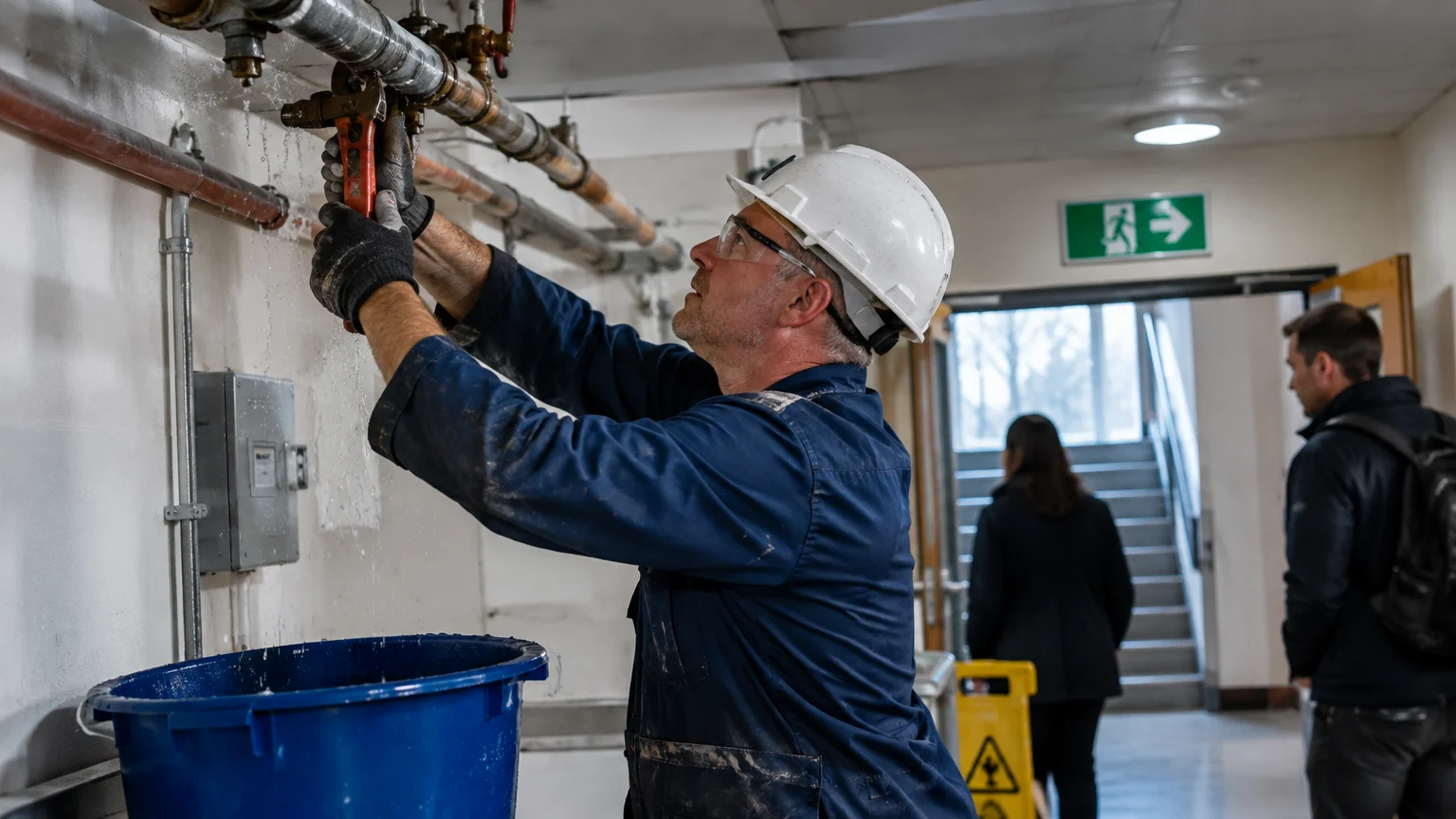
Access often has a major effect on repair costs. A pipe above an open ceiling may be easy to reach. A pipe behind tile, drywall, flooring, equipment, or stored goods may need careful removal and later repair. Pipe size and material can also change the work needed.
Urgency matters because an active leak can keep causing harm. Water may reach wiring, equipment, stock, tenant areas, or customer spaces. The plumber may need to isolate part of the building, protect nearby items, and test the system after the repair.
How does leak repair compare with related commercial plumbing work?
A leak repair may be smaller than full pipe replacement, but the cause matters. Drain cleaning clears blocked waste lines. Leak repair stops water escaping from a supply or drainage system. Water heater repair, toilet repair cost, fixture work, drain repair, and pipe replacement all need different parts and skills.
A leak that damages drywall, flooring, or other materials may need help from another trade. Those services are separate from plumbing repair. Plumber Lawrenceville GA can help property owners understand which work belongs in the quote and which work may need another contractor.
What types of commercial water leaks need professional repair?
Professional repair is needed when water keeps escaping, the source is not clear, or the leak affects a building system. Businesses should not ignore wet ceilings, higher water use, damp walls, low pressure, or repeated plumbing trouble. These signs can point to a hidden leak.
Some basic checks are safe for a manager or owner. Staff can close a nearby shutoff valve, move stock away from water, and inspect exposed connections. They should not open walls, cut floors, repair pressurized lines, or work near electrical equipment without training.
How do visible leaks differ from hidden leaks?
Visible leaks are easier to find because water appears near a pipe, valve, faucet, toilet, or appliance connection. The true source may still be higher or farther away. Water can travel along framing, ceilings, and floors before it becomes visible.
Hidden leaks may cause stains, peeling paint, soft flooring, musty smells, or unexplained moisture. A commercial plumber may use pressure checks, moisture tools, acoustic listening, thermal tools, or a camera. The best test depends on the building and plumbing system.
Which plumbing systems commonly develop leaks in commercial properties?
Commercial leaks can affect supply pipes, drain lines, fixtures, water heaters, boiler connections, irrigation systems, and fire protection equipment. Older pipes may corrode or weaken. Newer systems can still leak because of poor joints, movement, damage, or failed seals.
Kitchen areas, restrooms, mechanical rooms, tenant spaces, and roof equipment often need close review. Gas lines are a separate safety issue. A suspected gas leak requires people to leave the area and follow local emergency guidance. Staff should never test the line themselves.
How does leak location affect commercial repair costs?
Leak location changes the work because it affects access, testing, safety, and surface repair. A leak in an open mechanical room may be found and reached quickly. A leak under concrete, inside a wall, or beneath a finished floor needs more planning and may disrupt normal work.
The plumber should explain where the leak is believed to be and how certain that finding is. A careful plan can help limit needless openings in walls or floors. It can also show whether the building needs temporary water shutdowns or staged repairs.
Why are leaks behind walls, ceilings, or floors more complex?
Hidden leaks often need a search before repair begins. The plumber may trace moisture, test pipe sections, and inspect nearby rooms. Access openings should be placed with care, but the exact spot may not be known until testing is complete.
Finished surfaces can add work after the plumbing repair. Drywall, tile, flooring, insulation, and ceiling panels may need repair by qualified trades. Ask whether the plumbing quote includes only access and plumbing work or lists restoration separately.
How do underground and slab leaks change the scope of work?
An underground leak may affect soil, landscaping, parking areas, or utility paths. A slab leak occurs beneath concrete or a floor. Finding the exact line can be hard, and the repair may involve rerouting, breaking concrete, or using a less disruptive access method.
Commercial properties may need controls for traffic, tenants, equipment, and work hours. The plumber should explain expected disruption before work begins. A clear scope helps the owner plan shutdowns and protect staff, customers, and property.
What does a commercial water leak inspection include?
A commercial water leak inspection starts with questions about symptoms, timing, affected areas, past repairs, and recent changes. The plumber then checks visible pipes, valves, fixtures, pressure, and nearby damage. The goal is to find both the source and the reason for the leak.
The owner or manager should provide access to mechanical rooms, tenant areas, ceiling spaces, shutoff valves, and maintenance records. Good access can help the plumber test more of the system. It can also prevent delays when an active leak needs quick isolation.
How do plumbers find leaks that are not visible?
Plumbers may use pressure testing to find water loss in a closed section. They may listen for escaping water, check moisture patterns, use thermal equipment, or inspect drain lines with a camera. No single method works for every building or pipe type.
The plumber should explain what each test can and cannot prove. A moisture reading can show a wet area but may not identify the exact pipe. A camera can show some drain problems but cannot inspect every pressurized supply pipe.
What information should a leak inspection report document?
A useful report should name the suspected source, affected system, observed damage, testing method, and repair choices. It should say whether the leak is active, isolated, or still under review. Photos can show conditions before work begins.
The report should also list inspection limits. Concealed spaces may not be opened during the first visit. The owner should receive clear notes about access, shutdowns, safety concerns, follow-up tests, and work outside the plumbing scope.
When is emergency commercial leak repair necessary?
Emergency repair is needed when water is spreading, a major line has failed, the building cannot operate safely, or the leak threatens people, equipment, stock, or nearby spaces. A burst pipe, fast ceiling leak, or failed main line should not wait for normal scheduling.
A slow drip may still need prompt attention. Small leaks can harm framing, flooring, insulation, and stored goods over time. A property manager should document the condition, protect the area, and arrange professional help before the damage grows.
Which signs indicate that a leak cannot wait?
The following signs suggest urgent action:
- Water is flowing from a broken pipe, ceiling, wall, or floor.
- A shutoff valve will not stop the water.
- Electrical equipment or wiring may be wet.
- The leak affects a public area, work area, or occupied tenant space.
- Floors, ceilings, walls, or structural materials are becoming soft.
- Water pressure suddenly drops across part or all of the building.
People should stay away from unsafe areas and follow the building’s emergency plan. If water reaches electrical systems, staff should not enter until the area is declared safe.
What should property owners do before the plumber arrives?
The owner should close the nearest safe shutoff valve if its location is known. Staff can move portable items away from water, place safe containers under minor drips, and record photos for property records. They should never climb into unsafe ceiling spaces or handle damaged electrical equipment.
The owner should note when the problem began and whether water use changed. Access doors, keys, tenant notices, and maintenance records should be ready. These steps can help the plumber work faster without asking untrained staff to make repairs.
Should a commercial water leak be repaired or replaced?
The right choice depends on pipe condition, leak cause, location, age, material, and repair history. A targeted repair may suit a sound pipe with one damaged joint. Replacement may make more sense when the section has broad corrosion, repeated failures, or poor access.
A professional should explain both options when both are reasonable. The least disruptive choice is not always the best long-term choice. The owner should compare the current repair with the risk of another failure in the same section.
When is targeted pipe repair the practical option?
Targeted repair can work when the damaged area is clear and nearby pipe remains sound. It may involve replacing a fitting, seal, valve, or short pipe section. The plumber should test the repaired area and check nearby connections before returning the system to normal use.
This option may reduce disruption in an active business. It can also fit a planned maintenance window when the problem is controlled. Still, the owner should ask why the failure happened and whether nearby sections show similar wear.
When does replacing a pipe or plumbing section make more sense?
Replacement may be better when the pipe has repeated leaks, heavy corrosion, poor support, or widespread damage. It may also suit a system that no longer fits the building’s use. A larger repair can prevent repeated access work and business disruption.
The quote should explain what will be replaced and what will remain. It should list shutdown needs, access work, testing, permits when required, and restoration limits. Local rules may affect commercial plumbing work, so ask who will handle required approvals.
How can businesses compare commercial leak repair quotes?
Businesses should compare the scope, not only the final amount. A detailed quote shows whether each plumber included inspection, access, materials, testing, cleanup, and restoration. The final cost should be confirmed in writing before approved work begins.
A short quote may leave out needed work. A broader quote may include repairs that lower future risk. The owner should ask questions until the differences are clear and should not choose a contractor from a brief description alone.
What should a detailed plumbing quote include?
A strong quote should include:
- The suspected cause and exact area of the leak.
- The proposed repair or replacement method.
- Pipe, valve, fitting, seal, and other material details.
- Access, isolation, testing, cleanup, and restoration tasks.
- Expected business disruption and water shutdown needs.
- Items that are excluded or may need another trade.
The quote should explain what happens if hidden damage appears after opening an area. Written approval should be required before added work begins. This helps the business control the scope and keep records for owners, tenants, or insurers.
Which licensing, insurance, and workmanship questions should businesses ask?
The business should ask whether the plumber is licensed for the work and area involved. It should also ask for proof of insurance, commercial experience, permits, and inspection handling. Rules can vary by state and local authority, so owners should check official guidance.
The owner should ask who will do the work, how the system will be tested, and what workmanship coverage applies. Reviews can help, but clear answers and documents matter more. Plumber Lawrenceville GA serves property owners from Downtown Lawrenceville and Sugarloaf to Duluth, Suwanee, Grayson, Dacula, and nearby communities.
Frequently Asked Questions
What is the first step when a commercial water pipe leaks?
Keep people away from unsafe areas and stop the water if safe. Close the nearest shutoff valve, protect movable items, and arrange professional help. Do not cut walls, handle electrical equipment, or repair a pressurized pipe without training.
How can a business find a plumbing leak?
A business can inspect exposed pipes, valves, fixtures, ceilings, walls, and floors for moisture. It should watch for stains, musty smells, pressure changes, or unexplained water use. Hidden leaks may need pressure testing, acoustic tools, moisture checks, thermal tools, or camera inspection.
Does a hidden leak always require wall or floor removal?
No. A plumber may locate some leaks with testing or detection tools before opening a surface. Access may still be needed to confirm the source and finish the repair. The plumber should explain the least disruptive method and possible restoration work first.
Is water leak repair more urgent in a commercial building?
It can be, because commercial buildings often have more occupants, equipment, stock, tenant spaces, and connected plumbing. A leak can interrupt operations or affect nearby areas. Prompt isolation and inspection can help limit damage.
How should a business choose a commercial plumber?
Check licensing, insurance, commercial experience, written scope, testing plans, and workmanship terms. Compare complete quotes rather than short cost statements. Clear communication matters when hidden damage, shutdowns, access work, or another trade may be involved.
Key Takeaways
- Water leak repair cost depends on location, access, damage, urgency, and pipe condition.
- A visible leak can still come from a hidden source farther along the system.
- Businesses should isolate unsafe leaks and avoid electrical or pressurized pipe work.
- A detailed quote should explain testing, access, materials, restoration, and exclusions.
- Repair may suit one damaged area, while replacement may suit repeated failures.
Conclusion
Commercial water leaks need a careful response. First, protect people and limit water damage. Next, confirm the source, review repair choices, and approve a clear written scope.
Businesses in Lawrenceville can review their repair options before approving work. Plumber Lawrenceville GA can help businesses and property owners review leak concerns and plan suitable plumbing work. Contact us to arrange professional support for a commercial water leak assessment and repair quote.