

Overview: Burst pipe or hidden leak?
It happens fast: a hiss in the wall, a damp spot that spreads. Is it a burst pipe or hidden leak? Here’s the short answer. A burst pipe releases a lot of water at once, causes a sudden pressure drop, and often makes noise. A hidden leak seeps slowly, leaves localized damp patches, and the pressure loss is mild or intermittent.
In Lawrenceville, cold snaps, aging supply lines, and high system pressure can trigger both issues—especially during freeze–thaw swings common in Gwinnett County. This guide outlines clear signs, simple meter and shutoff tests, and safe immediate steps to confirm what you’re facing. It also explains how Plumber Lawrenceville GA handles urgent calls and repairs so you can act quickly and limit damage.
Quick diagnosis: signs of a burst pipe or hidden leak
A burst pipe is a sudden failure of the pipe wall that lets water escape rapidly; you may hear banging or a rushing sound and see a sharp pressure drop. A hidden leak is a small crack, pinhole, or failing joint where water escapes slowly and often collects out of sight.
Watch how your water behaves. If faucets spit air, then trickle, system pressure has likely plunged due to a major break. If flow seems normal but you notice damp drywall, a slow ceiling stain, or swelling trim, that points to a smaller concealed leak. Musty odors often signal long-term moisture.
Look for visible patterns. A burst can flood rooms, bulge ceilings, or send water through light fixtures. A hidden leak often creates paint blisters, warped baseboards, or a moisture ring that inches outward day by day.
Run two simple tests. The water meter test checks for unseen flow: turn off all fixtures and appliances, then watch the meter for 15 minutes. Any movement indicates a leak. Next, try the shutoff test: close the home’s main shutoff valve. If the meter still moves, the leak is on the supply line before the valve.
Use location and seasonal clues. Wet spots by an exterior wall after a freeze often signal a split pipe. Damp carpet by an interior wall may indicate a slab leak beneath the floor. Attic drips can be from the roof or piping; on hot days, also watch for pipe sweating that can mimic leaks.
Immediate steps to limit damage and stay safe
Act quickly. Small moves now can save drywall, flooring, and wiring.
-
Shut off the main water. The main shutoff valve stops water to the home. Turn it clockwise. If you cannot turn it, use the street valve only if safe and if you have the right wrench.
-
Kill power near water. Do not run electrical devices on wet floors. Flip breakers for soaked areas only if the panel is dry and you are not standing in water. Keep people and pets away from standing water.
-
Open a low faucet. This relieves pressure and drains lines, which can slow the leak until help arrives.
-
Contain and document. Move belongings. Place buckets and towels. Photograph damage and water paths for your records.
-
Control moisture. Run fans and a dehumidifier if it’s safe. Pull up small rugs. Vent damp rooms to reduce mold risk.
-
Avoid risky fixes. Do not heat frozen pipes with open flames. Do not tape or glue a pressurized line. Wait until pressure is off.
-
Protect drains. If the sewer backs up, stop running water. Using fixtures can force more waste into living spaces.
How pros find and fix the problem
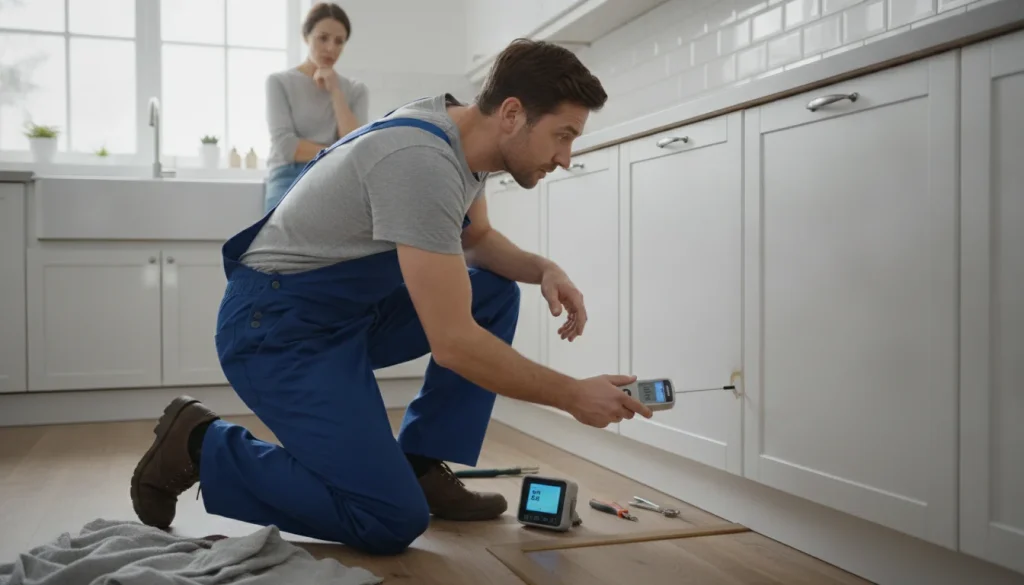
Licensed plumbers use proven tools and tests to pinpoint leaks fast while minimizing wall or floor openings.
Leak detection methods
Acoustic leak detection uses sensitive microphones to hear escaping water in walls or under slabs. Thermal imaging maps temperature differences that reveal damp areas. Tracer gas (a light, safe gas mix) tracks tiny leaks as gas rises and is detected at the surface.
They may run pressure testing to confirm whether an isolated zone loses pressure. By closing valves to separate sections, the exact run can be checked without opening every surface, saving time and preventing extra disruption.
Common repair options
Repairs depend on pipe type and access. Small splits can take repair clamps. Damaged sections are replaced with couplings or short re-pipe runs. Worn valves get swapped to improve shutoff control. If the issue is a water heater or a fixture supply, the fix targets those components rather than the main piping; in some cases, focused Toilet Repair or Sink Repair resolves fixture-side leaks.
Plumber Lawrenceville GA handles Emergency Plumbing and Leaks & Burst Pipes calls across Lawrenceville every week. Teams arrive with parts for common copper, PEX, and PVC repairs and advise on prevention once the line is dry and safe.
When to call 24/7 emergency plumbing and what to expect
Call 24/7 help when water will not stop, ceilings sag, the main supply leaks, or the leak is near electrical systems. Slow damp spots can wait briefly if contained, but do not delay if staining spreads or the meter continues to move.
Share clear facts with the dispatcher: where water shows, when it started, floors affected, whether power is off, and if the main valve is stuck. Note pipe type if known. Photos help the tech plan access and bring the right parts.
On arrival, expect shutoff, quick diagnostics, and a stable repair or safe bypass. In the U.S., costs vary by pipe material, access difficulty, after-hours timing, and any drywall or slab opening needed. Cleanup, drying, and mold remediation add time and may require separate scheduling.
Prevention steps
Start prevention right after repairs. A pressure-reducing valve (PRV) keeps typical home pressure near 50–60 psi. Add insulation to exposed lines. Drain outdoor hose bibs before freezes. Smart leak sensors and auto-shutoff valves can cut future damage by stopping flow fast.
Frequently Asked Questions
### ### ### ### What should I do first if a pipe bursts at night?
Shut off the main water valve, then cut power to wet areas. Open a low faucet to relieve pressure. Move valuables and place buckets. Document damage with photos. Then call an emergency plumber for a rapid response and clear next steps.
### ### ### ### How can I tell if a leak is under the slab?
Watch for warm or damp flooring, higher water bills, and the sound of running water when fixtures are off. Do a 15-minute meter test. If the meter keeps moving with every fixture off, a slab leak is possible and needs professional detection.
### ### ### ### Will my water heater cause the same signs as a burst pipe?
Not usually. Water heater leaks are often slow and pool at the base. You may see rust trails or hear hissing at the tank. A burst pipe releases water quickly and drops pressure throughout the home. Check the heater drain pan and shutoff valve first.
Key takeaways
- Sudden heavy flow with a sharp pressure drop points to a burst; slow, localized moisture suggests a hidden leak.
- Shut water off, cut power to wet areas, and ventilate to limit damage and reduce mold risk.
- Pros use acoustic, thermal, tracer gas, and pressure testing to locate leaks accurately.
- Repairs range from clamps and couplings to short re-pipe sections and valve replacements.
- Prevent repeats with a PRV set near 50–60 psi, insulation, and smart leak detection tools.
Conclusion
From diagnosis to repair, Plumber Lawrenceville GA serves homes and businesses throughout Lawrenceville and nearby communities. If you need help in Lawrenceville with a burst pipe or hidden leak, the team can guide you step by step. Contact us.